Where the margin goes
A freelancer’s rate is agreed in an email, the client’s fee in a statement of work, the hours in a time tracker and the invoices in accounting. A rate goes up for the freelancer but not for the client, a project runs past the end of its statement of work, hours above the retainer are never billed.
What Vatli checks for an agency
- The same freelancer, period and rate on both sides.
The freelancer’s agreement and the client’s order or statement of work are compared line by line, and each gap says which document says what.
- Hours reported, accepted and invoiced.
Hours come from the client’s timesheet export. Accepted hours that were never invoiced, and contractor invoices that differ from the agreement, are flagged with the amount.
- The margin, against the norm.
Margin by client, role and seniority over time. Change a client rate and Vatli shows the new margin and asks whether the change is intended.
- Renewals before they lapse.
Contracts and orders that run out are listed ahead of time, and the annex is drafted from the data: the term follows the client’s order and the notice period comes from the client’s agreement.
- Both signatures, and how late they came.
Unsigned orders and late client signatures become tasks for the account manager, one click for many.
The screens your team would use
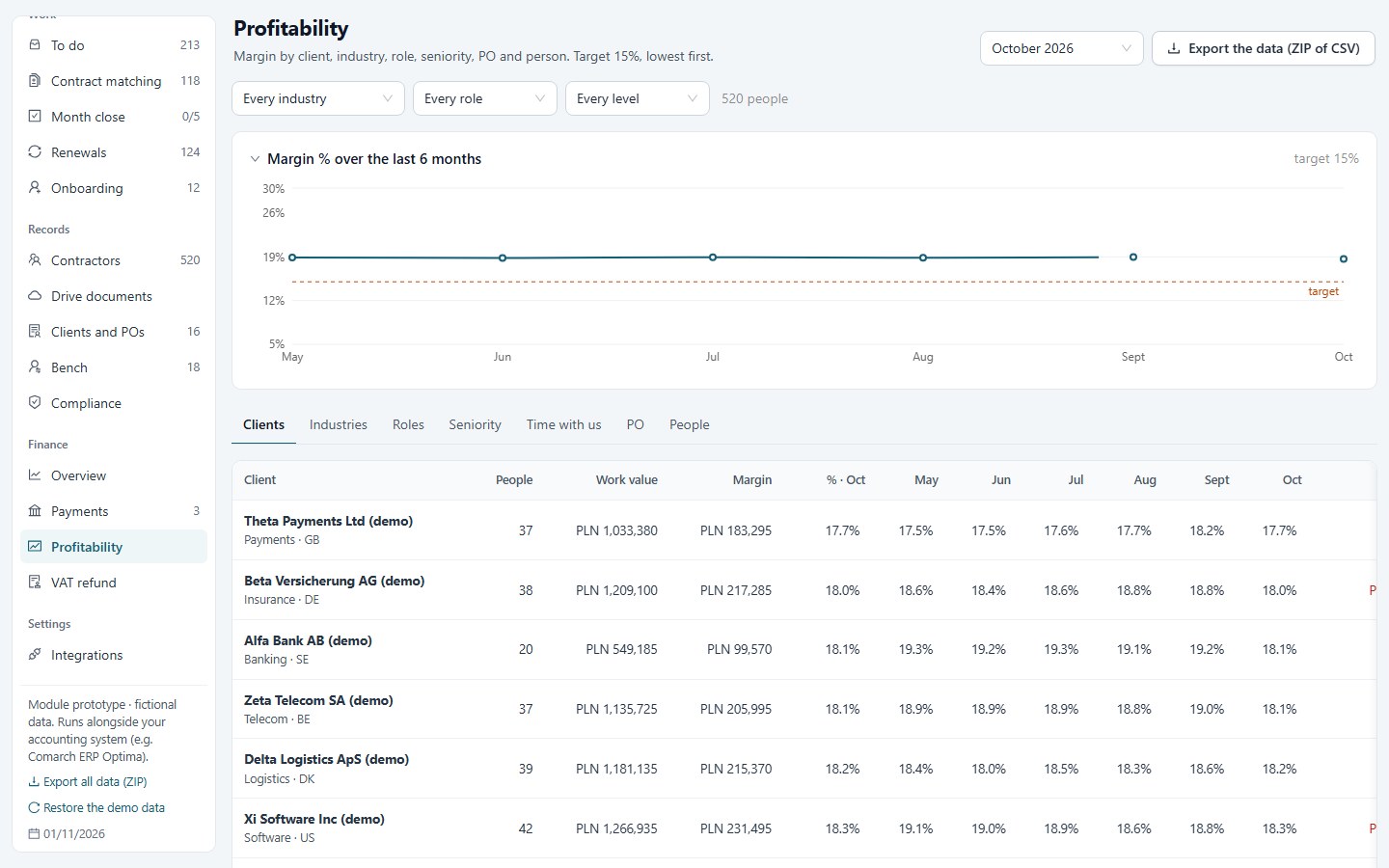
Margin over time. By client, role and seniority, with one export. 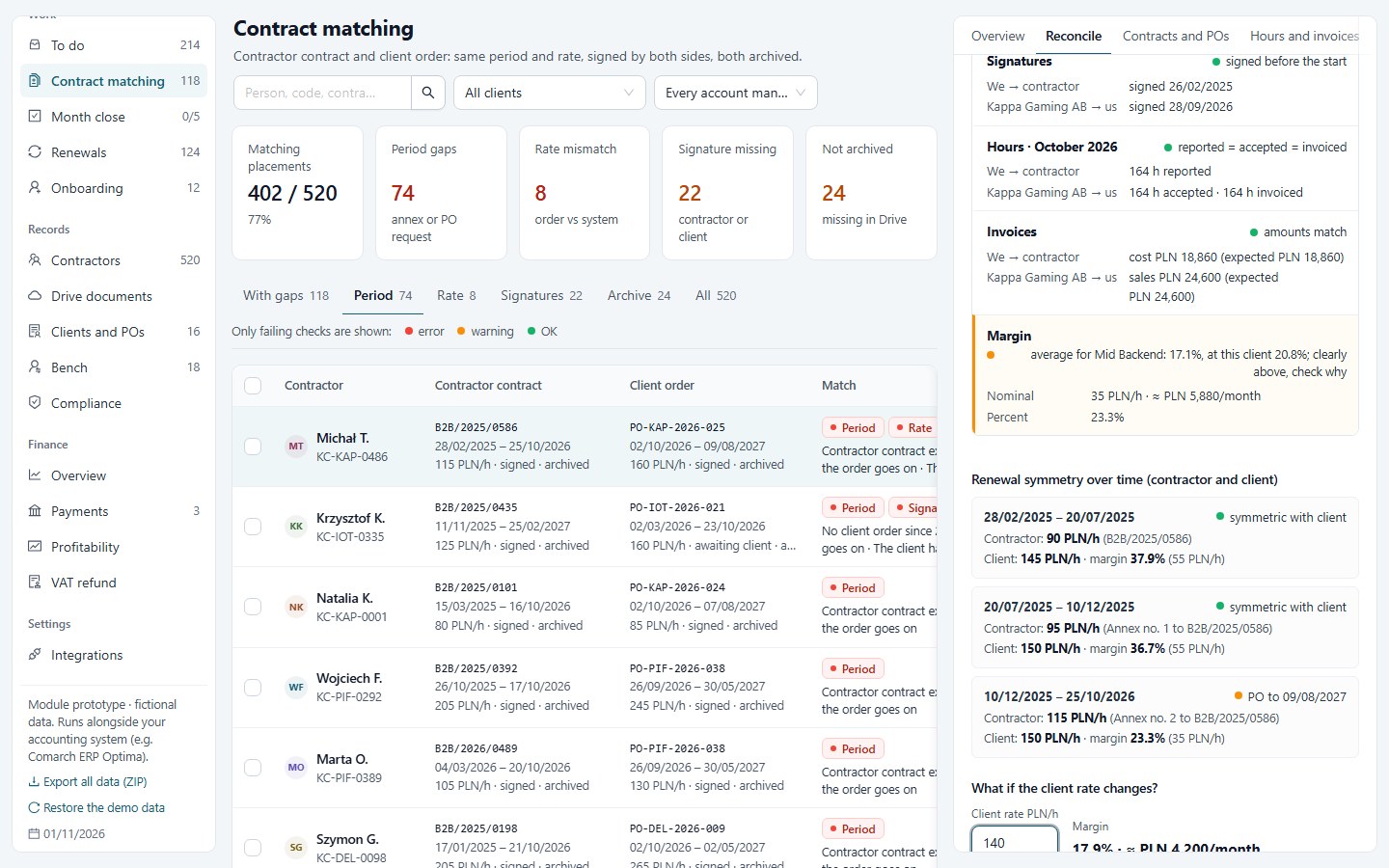
One record, both sides. Rate, term, signatures, hours, invoices and margin, with a what-if on the rate.
The Contractors module was built with an IT staffing firm. Marketing agencies run on the same three-party paperwork: one agency, one contractor or freelancer, one client. Demos and screens use fictional IT staffing data; a trial on your own documents is agreed with your team first.