Where placements slip
Recruitment closes the deal; operations and finance inherit the paperwork. The client signs the order weeks late, the contractor’s bank account for the VAT whitelist arrives after the first payment is due, a contract ends while the client still wants the person.
What Vatli checks for every placement
- Onboarding for every new person.
Each placement moves through invitation, company checks, VAT status, the whitelist, contract and NDA to ready to start, with an owner and a date for every step.
- Both signatures, and how late they came.
Unsigned orders and late client signatures become tasks for the account manager, one click for many.
- The bank account on Poland’s VAT whitelist.
A live check against the Ministry of Finance register, with the request ID kept as evidence, before the first payment.
- Renewals before they lapse.
Contracts and orders that run out are listed ahead of time, and the annex is drafted from the data: the term follows the client’s order and the notice period comes from the client’s agreement.
- Hours reported, accepted and invoiced.
Hours come from the client’s timesheet export. Accepted hours that were never invoiced, and contractor invoices that differ from the agreement, are flagged with the amount.
- The margin, against the norm.
Margin by client, role and seniority over time. Change a client rate and Vatli shows the new margin and asks whether the change is intended.
The screens your team would use
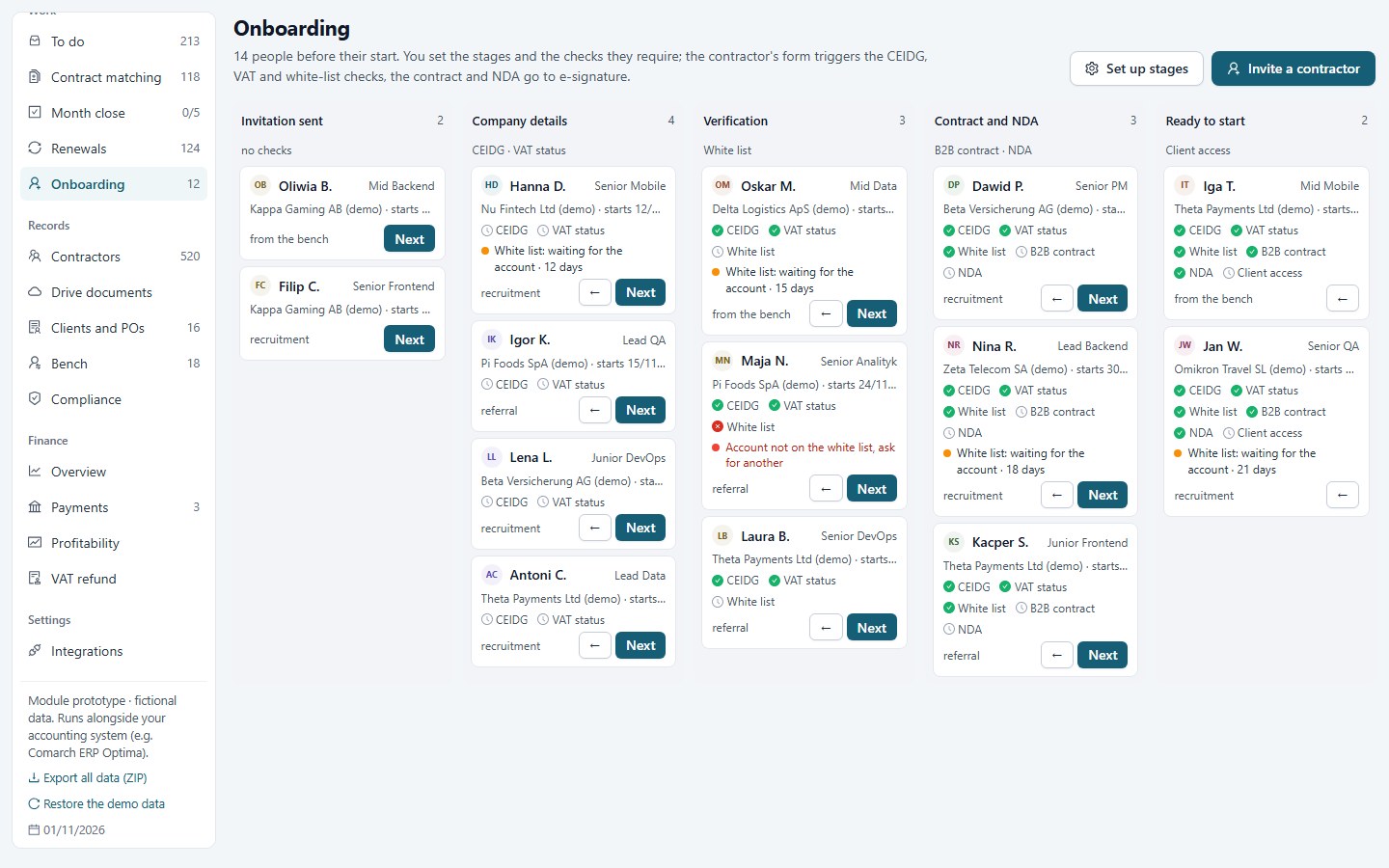
Onboarding. Company checks, the VAT whitelist, contract and NDA for every new person. 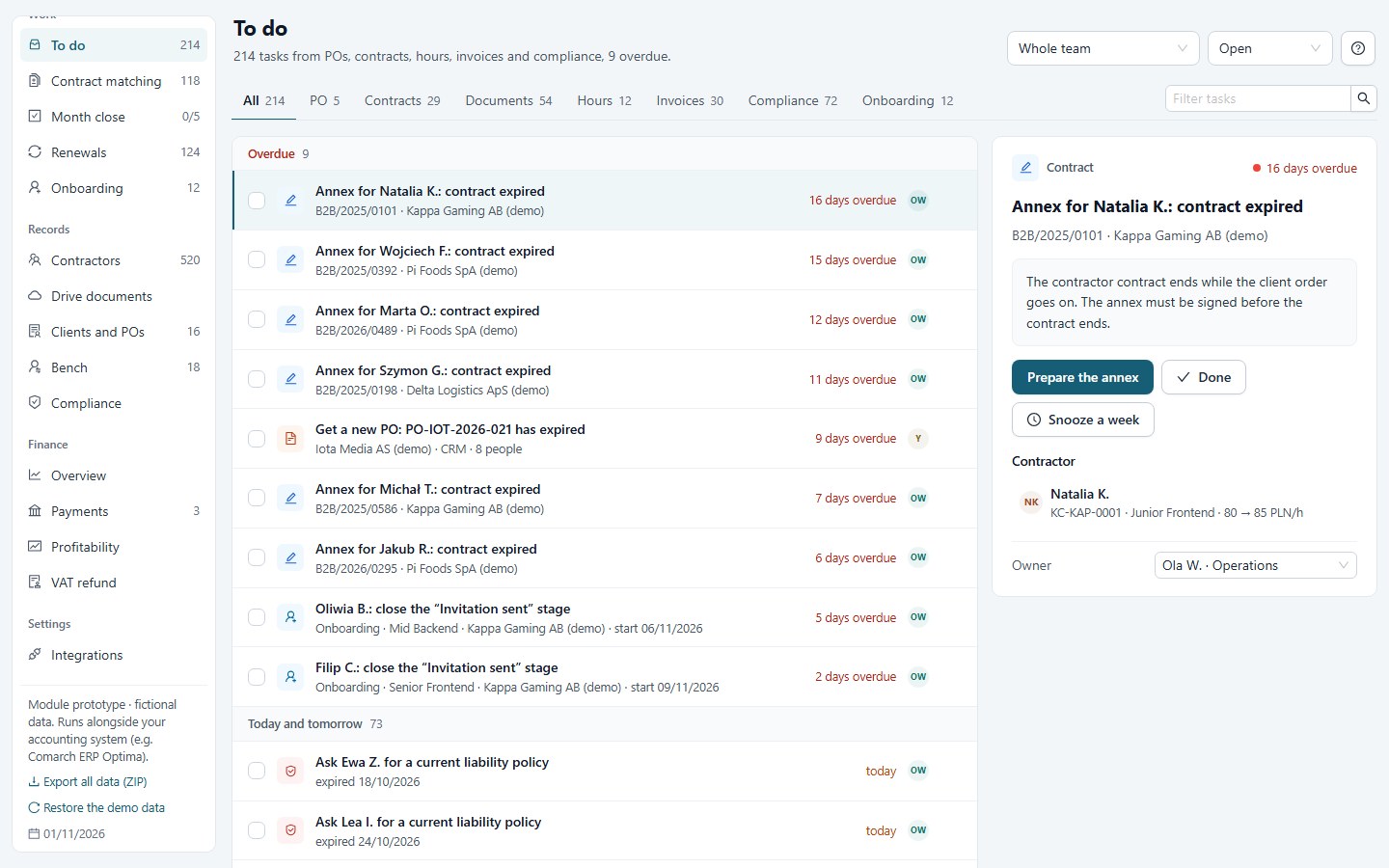
To do. Every task that needs a person today, worked out from the documents.
The Contractors module was built with an IT staffing firm. Agencies that place contractors run on the same three-party paperwork: one agency, one contractor or freelancer, one client. Demos and screens use fictional IT staffing data; a trial on your own documents is agreed with your team first.
Vatli covers contract placements. Fees for permanent hires are not part of the module.